Graphene Water Filter
4982 in stock
4.7
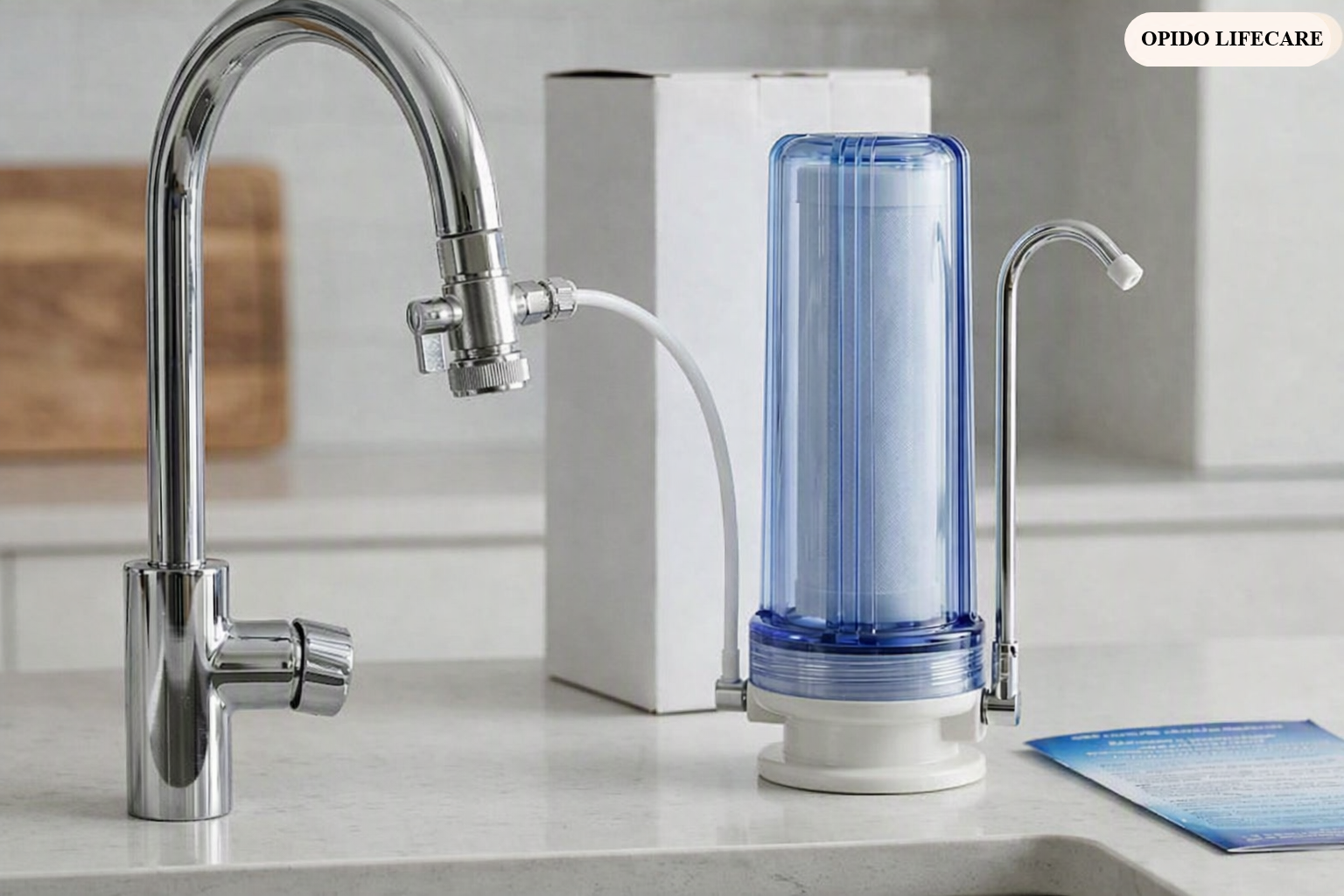
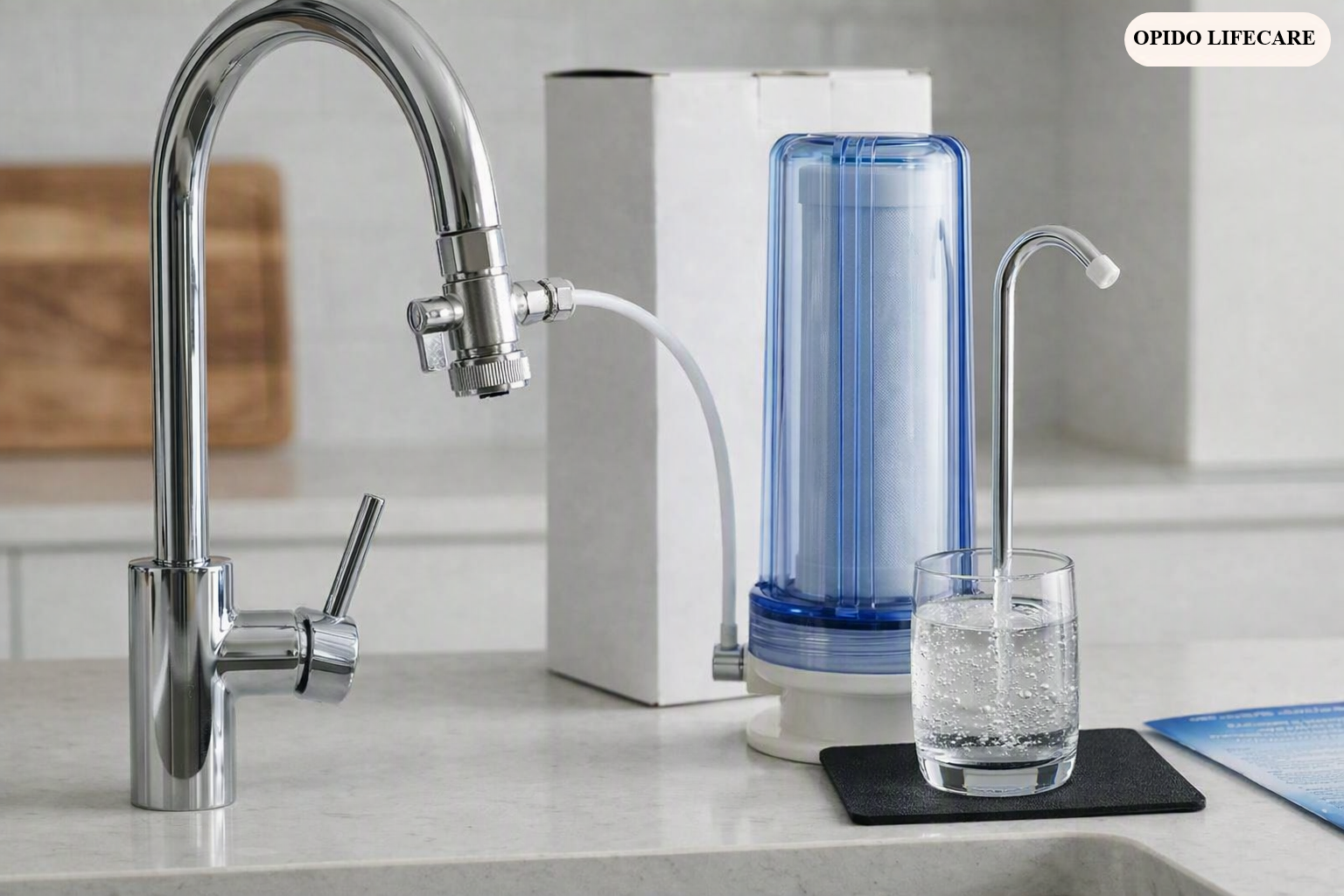
Graphene is a “wonder material” with unmatched strength, conductivity, and versatility. A graphene water filter is an advanced filtration system that uses graphene-based membranes or composites to purify water, offering faster flow, higher efficiency, and the ability to remove salts, heavy metals, and organic contaminants more effectively than traditional filters.
Special Offer
Buy 1 + 1
Get Extra 10% Discount
Buy 1 + 2
Get Extra 15% Discount
Buy 1 + 3
Get Extra 20% Discount
Prime Members
Get Extra 15% Discount
17,999.40
29,999.00
Other products you may be interested
Graphene Water Filter
17,999.40
29,999.00
( 40 %
Off)
Description
This household Graphene filter is equipped with the BAKS-001 filtering material and is designed for water purification of open reservoirs, artesian wells, as well as water from water supply networks up to the requirements of GOST 2874-82 for drinking water.
This filter can be used not only autonomously when receiving ecologically clean water for home or office, but also as part of technological equipment for enterprises producing soft drinks, for food production, for cafes, restaurants, etc.
TECHNICAL CHARACTERISTICS
The main parameters and dimensions of the filter (general view - Picture 1) correspond to the data below:
-
-
- Material of filter parts - 12X18H10T GOST 5949-76
- Working pressure, atm. - 0.2 + 6.0
- Nominal bore, mm - 014
- Flask diameter, mm - 090
- Flask length, mm - 360
- Connecting dimensions of the hydraulic system, inch - 112··
- Dimensions on the base, mm - 145 in height, mm - 456
- Technical parameters of the filter material (silver carbon ceramics):
- Diameter of filtering material granules, mm .............. 0 0.1 + 2.0
- The total volume of the filter material, filled into the filter, dm3................................................................. 2.0
- Mass of the filter nozzle, kg ................................. 1.1 + 1.2
- The total volume of purified water obtained per one filter cycle, m3.................................. 100
- Filter capacity, I/hour................................. 150
- Content of SiO 2 in the filtering material, 0/o 10
- Content of carbon in the filtering material,0/o.................................................... 89
- Content in the filtering material of recovered siIver,0/o............................................................. 1
-
Filter operation
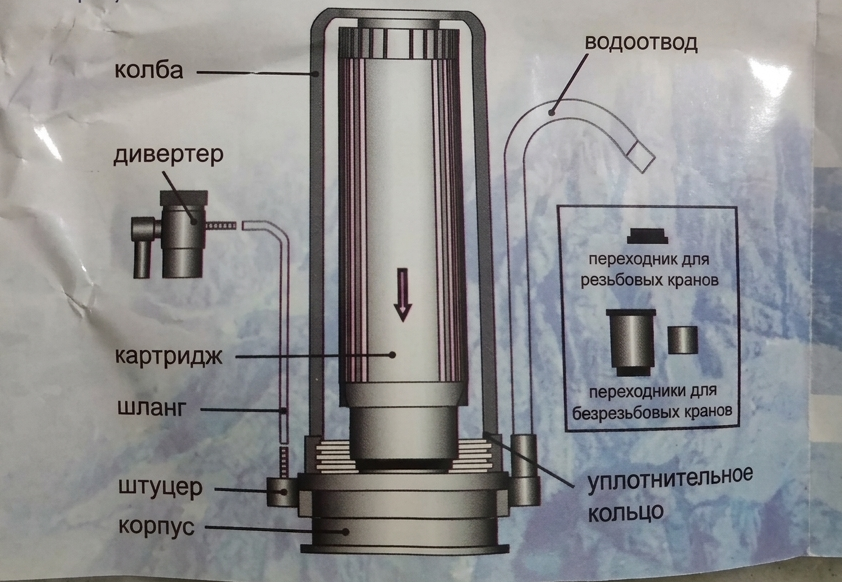
The water supply is carried out from the bottom up through the tee (point 1), the shut-off valve (point 2), and the lower connection of the filter, and the upper connection is connected to the tap for taking clean water. Untreated water from a water supply system or a natural source (including open reservoirs: rivers, ponds, reservoirs, or wells) is fed to the filter from the bottom up under an overpressure of 0.2 A 6.0 atm. through the lower nozzle (2) and enters the trapping chamber of large particles (iron scale, sand) (14) formed by the cover (8) and the lower distributor (4). After passing through the entire sorbent layer, the purified water is collected in the filtrate assembly chamber (15) formed by the upper distributor (5) and the conical part of the body (1); and through the upper fitting (3) is supplied to the consumer. Purification of drinking water in the filter takes place according to the sorption • filtration mechanism:
- large particles of impurities (iron scale, sand) are deposited in the trap chamber due to the loss of linear velocity and gravitational forces;
- fine particles in the form of a suspension of iron (111) hydroxide and clay impurities are retained, that is, they are filtered out in the intergranular space;
- colloidal particles of iron (II) and iron (Ill), heavy metal ions, radionuclides, fulvic and humic acids, oil products, active chlorine are sorbed by granules of the filtering material.
In short How It Works ?
• Graphene Oxide Membranes: These membranes allow water molecules to pass while blocking salts, heavy metals, and organic pollutants.
• Nanopores in Graphene Sheets: Precisely engineered pores act as sieves, filtering contaminants at the molecular level.
• Hybrid Composites: Graphene combined with polymers or other nanomaterials improves durability and selectivity.
Product Highlights
- FILTER DEVICE
The filter includes a hollow body (1) equipped with an inlet (2) and outlet (3) fittings. A granular filter nozzle (6) is located inside the housing between two perforated devices (4) and (5). The lower distributive device (4) is movable and spring-loaded by a calibrated spring (7). The lower part of the body (1) is closed with a cover (8) and is joined to the body by a clamp (9) through the seal (10). The filter is mounted vertically on a stand (11), which is screwed to the cover (8) with a screw (12). The lower fitting (3) is connected at one end to the water main (pipeline), the other end of the fitting is closed with a plug (13). The upper connection is powered by a tap that regulates the rate of freshwater withdrawal (Picture 2).
- PRINCIPLE OF FILTER OPERATION
Installation of the filter in a stationary version. To assemble and install the filter under the kitchen sink, you must purchase in advance:
- A tee
- shut-off valve
- fittings for installing the pipeline from the tee with the above valve to the filter, and from the filter to the tap for clean water
- a tap for clean water, mounted on the sink.
INSTRUCTIONS FOR USE
In the event of a long break in the operation of the filter , it is recommended to close the tap (point 2). It is forbidden to use the filter when repairing the water supply network. It is recommended to turn on the filter only after the water from the main tap acquires the transparency typical for the water in the region. Otherwise, the filter will delay the annual dose of impurities, which means that the filter cycle is significantly reduced, and the need for filter regeneration will arise much earlier.
The service life of the filter, equipped with a new filtering material (silver carbon-ceramic), is designed to purify 100 m3 of moderately contaminated water. This volume is enough for 4 years of use for a family of 3-5 people. At the same time, the daily withdrawal of clean water can reach up to 150 liters per day. To return the filtering properties, the sorbent is regenerated at home (regeneration at service centers is also possible).
Major Ingredients
ECHNICAL CHARACTERISTICS
The main parameters and dimensions of the filter (general view - Picture 1) correspond to the data below:
-
-
 Material of filter parts - 12X18H10T GOST 5949-76
- Working pressure, atm. - 0.2 + 6.0
- Nominal bore, mm - 014
- Flask diameter, mm - 090
- Flask length, mm - 360
- Connecting dimensions of the hydraulic system, inch - 112··
- Dimensions on the base, mm - 145 in height, mm - 456
-
Picture 1
Technical parameters of the filter material (silver carbon ceramics):
- Diameter of filtering material granules, mm .............. 0 0.1 + 2.0
- The total volume of the filter material, filled into the filter, dm3............................................................................................................................... 2.0
- Mass of the filter nozzle, kg ................................. 1.1 + 1.2
- The total volume of purified water obtained per one filter cycle, m3.................. 100
- Filter capacity, I/hour......................................................................................... 150
- Content of SiO 2 in the filtering material, 0/o................................................. 10
- Content of carbon in the filtering material,0/o................................................ 89
- Content in the filtering material of recovered siIver,0/o.............................................. 1
Direction for Use
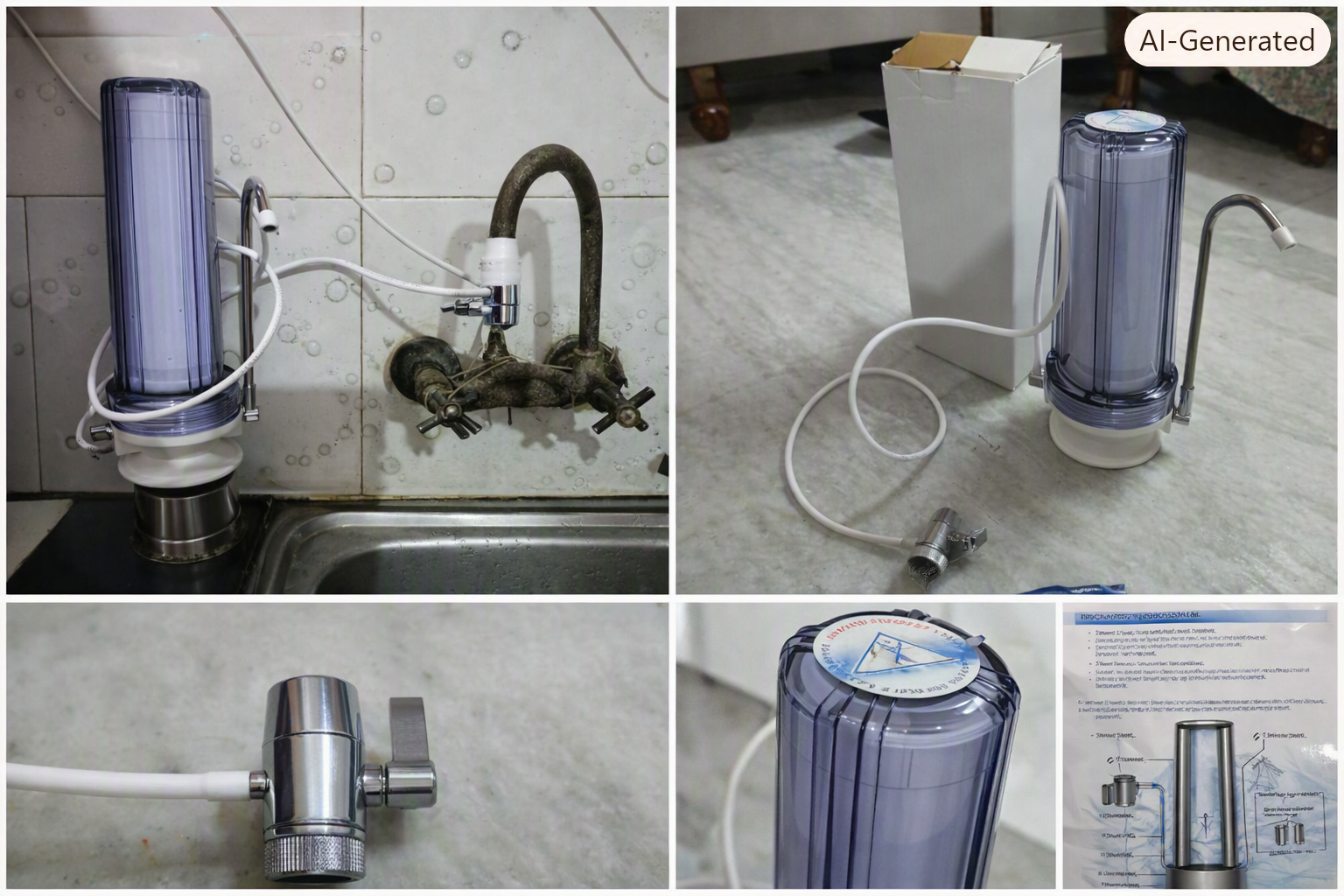
It can be used without any electricity and any other extraordinary requirement. Simply fasten the still nob provided with the filter to your household Tap and start getting fresh and drinkable water from its outlet part..A family of 4 can use this filter continuously for upto 4 years without replacing its filter or any other device of this filter.
In the event of a long break in the operation of the filter, it is recommended to close the tap (point 2). It is forbidden to use the filter when repairing the water supply network. It is recommended to turn on the filter only after the water from the main tap acquires the transparency typical for the water in the region. Otherwise, the filter will delay the annual dose of impurities, which means that the filter cycle is significantly reduced, and the need for filter regeneration will arise much earlier.
The service life of the filter, equipped with a new filtering material (silver carbon-ceramic), is designed to purify 100 m3 of moderately contaminated water. This volume is enough for 4 years of use for a family of 3-5 people. At the same time, the daily withdrawal of clean water can reach up to 150 liters per day. To return the filtering properties, the sorbent is regenerated at home (regeneration at service centers is also possible).
Any Other Information
FILTER REGENERATION IN HOME CONDITIONS
To regenerate the filter, that is, to restore its original ability to absorb polydisperse impurities and heavy metal ions in the treated water, it is necessary:
1) disconnect the filter from the water supply network. Before this, you need to close the tap in front of the filter and open the tap for freshwater consumption, open the plug (13) and collect the water flowing out of the filter into a container;
2) place the filter on the table. Pressing the filter to the table with your left hand, release the clamp (9) from the latch with your right hand and remove it. As a result of the pressure of the springs, the body (1) and the cover (8) are separated;
3) take out the lower drainage device (4) from the body (1) and shake out the granular nozzle into a pre-prepared food enamel dish (bucket, saucepan, etc.);
4) the upper drainage device (5) is removed for flushing;
5) add 7-8 liters of tap water and stir the filter material in the water;
6) after 15-20 sec. after the end of mixing, two layers are formed: the upper one is in the form of a reddish-brown suspension, and the lower one is in the form of a layer of settled granules;
7) carefully drain the top layer into the sewer (! In order to avoid the loss of the nozzle, it is recommended to drain the dirty water not immediately into the sewer, but into an intermediate vessel!);
8) add 7-8 liters of water to the nozzle partially freed from dirt, mix. Repeat steps 5-6 as many times as necessary for the water above the filter material to become transparent (about 7-10 times);
9) clear water after the last washing should be drained, and 200 g of citric acid should be added to the sorbent layer;
10) bring the mixture of sorbent and citric acid to a boil. Boil in a closed container at low heat for 45-60 minutes;
11) as the water containing the sorbent boils away, it is necessary to add hot water from the boiling kettle in small portions. This is necessary in order to avoid crystallization of citric acid compounds with iron ions and heavy metal ions in the sorbent phase;
12) after the end of the boiling process, it is necessary to add 5-7 liters of cold tap water and stir the sorbent with a stainless steel tablespoon;
13) after a 5-minute pause, drain the water into the sewer (following point 7);
14) filling the filter with a regenerated nozzle.
The procedure for filling the regenerated nozzle:
-
- insert the upper drainage device (5) into the body (1) (up to the stop, so that the nozzle does not delaminate in the future), since the upper drainage device was removed for flushing;
2) screw the plug (13) onto the upper union (3);
3) the filter nozzle, soaked in water, is transferred in portions (using a tablespoon) into the filter housing. At the same time, with the upper fitting, closed with a plug (13), we knock on a kitchen cutting board to evenly distribute the nozzle over the filter housing;
4) the lower drainage device is installed (up to the stop in the nozzle);
5) a spring (7) is placed in the center of the lower drainage device;
6) over the spring, a cover (8) is installed, which is pressed until the cover (8) closes with the body (1). It is recommended to press the cover against the body (1), in which the spring (7) is inserted, with both hands;
7) this position is closed by a clamp (9). It is necessary for the assistant to put on the collar and tighten it;
8) the assembled filter is installed on a stand;
9) the plug (13) is removed from the upper fitting (3) and put on one of the ends of the inlet fitting (2);
10) the liquid pouring out of the unclosed fitting (2) is collected in a container and drained into the sewer;
11) after performing the above operations, the filter must be connected to the water supply network;
12) for the final removal of citric acid from the granules of the filtering material, it is necessary to pass 20 liters of water through the filter. After the performed operations, the filter is ready for operation within 3-4 years.
To obtain soft-tasting water, while maintaining the natural mineral composition of the water, you must:
1) disconnect the regenerated filter from the network and through the funnel inserted into the upper fitting (3), spill 1 liter of water with baking soda dissolved in it in the amount of 1 tablespoon (with a slide);
2) after that, the filter is connected to the water supply network, the first 3 liters of water are discharged into the sewer; Subsequently, the purified water acquires a mild taste, while retaining all the mineral salts necessary for a person.
SERVICE LIFE OF THE FILTER NOZZLE
It has been experimentally established that forty filtration cycles, which means that the regenerations did not lead to the destruction of the granules of the filter nozzle. At the same time, the dirt holding capacity of the nozzle remained unchanged. Taking into account the fact that regeneration must be carried out every 4 years, it is easy to calculate that the service life of the filter is approximately 120 - 160 years. With a threefold safety factor in terms of resources, we assume that the service life of the filter nozzle during 40-50 years is quite realistic. During regeneration, the loss of granular packing was noted in the amount of 0.4 - 0.5°/o. The total loss of silver carbon ceramics over 40-50 years can be 15-20°/o. Thanks to the original design of the filter, namely: the presence of a movable drainage device, which is constantly in a spring-loaded state, does not allow the granules of the filtering material to separate, since the length of the spring and its elasticity are designed for trouble-free operation of the filter even with a loss of 30 - 35°/o of the nozzle. Thus, the service life of the filter is practically unlimited and depends only on the mechanical durability of the housing, as well as the rubber seals.
Graphene Water Filter
4982 in stock
0
( Reviews: 0)
Graphene is a “wonder material” with unmatched strength, conductivity, and versatility. A graphene water filter is an advanced filtration system that uses graphene-based membranes or composites to purify water, offering faster flow, higher efficiency, and the ability to remove salts, heavy metals, and organic contaminants more effectively than traditional filters.
Special Offer
Buy 1 + 1
Get Extra 10% Discount
Buy 1 + 2
Get Extra 15% Discount
Buy 1 + 3(+)
Get Extra 20% Discount
Prime Members
Get Extra 15% Discount
